
Cars May Soon Determine if You’ve Had Too Much to Drink
Shortly after consuming that last drink, you choose to get
in your car and drive home. Unwise as that decision may be, it’s yours to make.
Soon, that decision may be made for you—by your car.
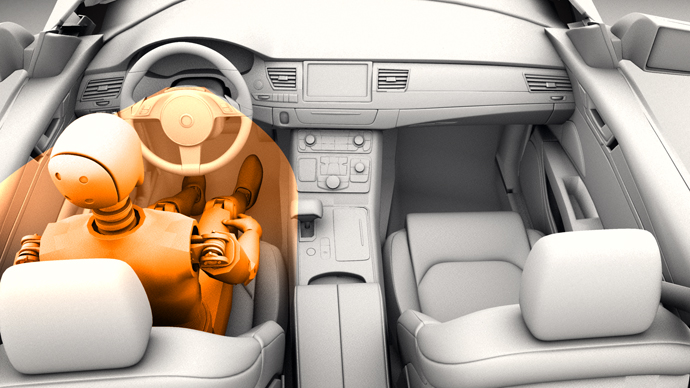
With more than 10,000 lives and $44 billion lost as a result of drunk driving each year, private car companies and public safety agencies are implementing new technological innovations in an effort to curb drunk driving. The Driver Alcohol Detection System for Safety (DADSS), which includes two technological approaches to assess driver impairment, may be available within the next year. Carmaker Volvo hopes to end fatalities with in-car cameras standard on all new models starting in the early 2020s.
DADSS—Measuring Breath and BAC
The DADSS research program is a collaboration between the Automotive Coalition for Traffic Safety (ACTS), representing automakers and The National Highway Traffic Administration (NHTSA), a federal institution committed to reducing injuries and economic costs related to traffic crashes.
In development since
2008, the DADSS collaboration leaders say that portions of
their systems will be ready for use in new commercial fleet vehicles in 2020
after extensive use in both public and private fleets in 2018 and 2019.
The DADSS takes two
different technological approaches to prevent drunk driving:
The breath-based system is designed to take readings as the driver breathes normally while
distinguishing between the driver’s breath and that of any passengers.
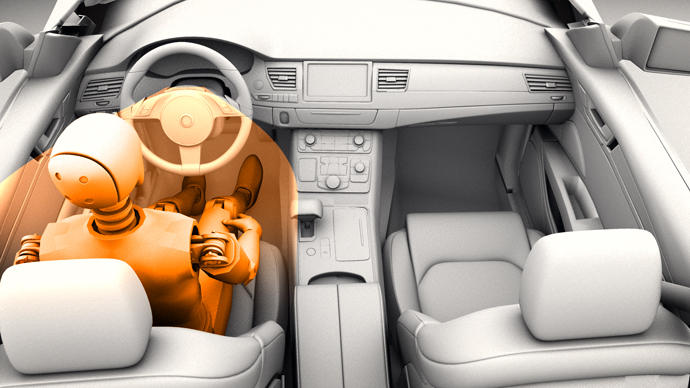
The touch-based system, located in the start button or steering wheel, will measure BAC levels with infrared light directed into the driver’s fingertip.
The DADSS system would not allow the device-enabled car to
start if the breath or the touch system fails.
To enter the market the DADSS systems must not adversely affect sober drivers and require little maintenance or owner involvement. Will the DADDS technology prevent or deter impaired driving while meeting consumer needs and lasting for the lifetime of the vehicle? Will these devices be tamper-proof, reliable, and effectively prevent impaired driving?
Volvo’s Sensory Approach to Drunk Driving
Volvo announced in March 2019 that starting in the early 2020s all next-generation cars of specific models would be equipped with in-car cameras that will be able to see and feel driver behavior that may be linked to impaired-driving from intoxication. The cars will sense behavior such as distracted driving, slow reaction times, and excessive weaving.
If such behavior is detected, the system will intervene with
a call to Volvo’s on-call assistance service, limiting the car’s speed, or even
actively taking control of the car and bringing it to a stop.
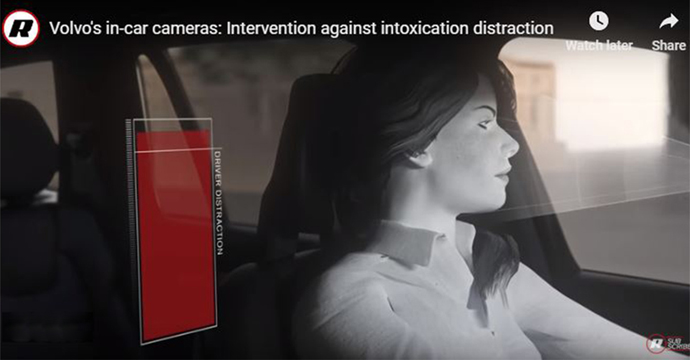
When this advanced software system detects impaired driving,
what will be the consequences for the impaired driver, if any? As a private
entity, the Volvo company is not authorized to make an arrest. Will the on-call
service contact local law enforcement? Perhaps the impaired, informed driver
will get to determine their level of impairment and what to do about it.
Both of these new technologies will be available only in new cars, not for installation or adaption to vehicles already on the road. The life-saving potential of these technologies may be lost in the statistics: One study has estimated that there were 112 million alcohol-impaired driving episodes in 2010. In that same year, only 11.5 million new cars and trucks were sold.
What do you think of the ability of these new technologies
to limit drunk driving—will they act as a deterrent to getting behind the
wheel, or stop impaired driving once you’re on the road? Will they have any effect
at all? Let us know your thoughts in the comment section below.
Source: Sobering Up Blog